
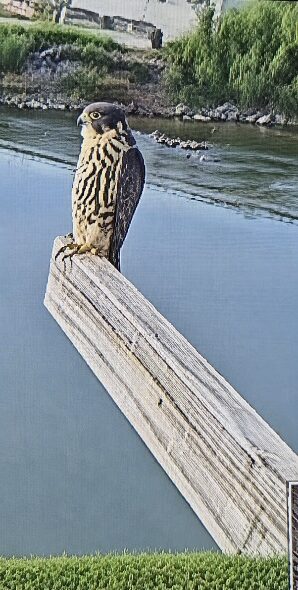
The initial sighting of a peregrine falcon at the nesting box on Aug. 20.
A peregrine falcon has discovered the new nesting box and perch installed at Domtar’s Nekoosa Mill.
Cameras monitoring the box first captured a falcon perched about 100 feet above the Wisconsin River on Aug. 20.
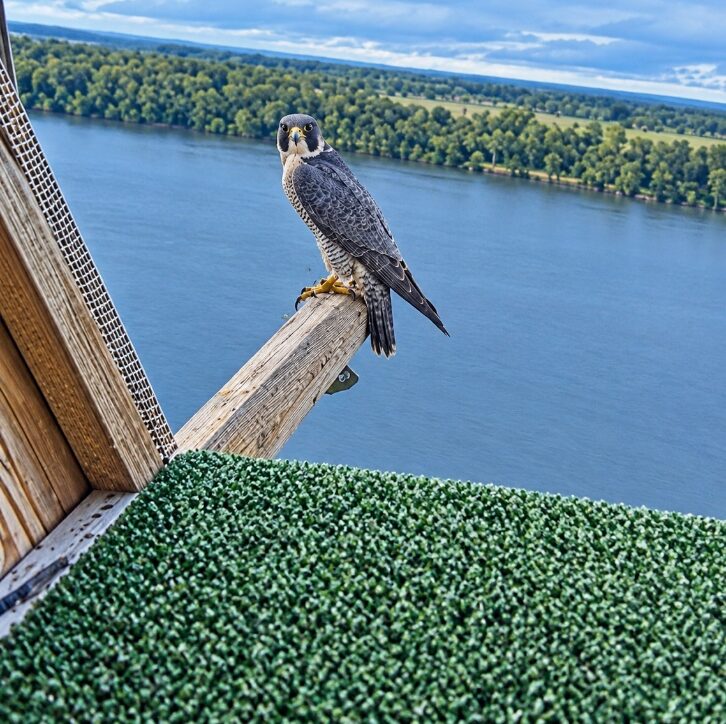
Karl Reinke, the mill’s process owner for power and utilities, believes the falcon was a juvenile exploring potential nesting sites for next spring. Another peregrine falcon, believed to be a different bird, was spotted eating prey on the box’s perch on Sept. 17.
Domtar employees installed the nesting box in February 2026 as part of an employee-led effort to provide the birds with a safe place to raise their young. The project started after a falcon nesting box at the former Wisconsin Rapids Mill was destroyed during the mill’s demolition.
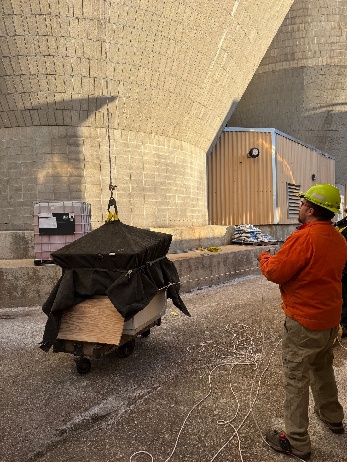
Nekoosa Mill pipefitter Steve Suzda approached Reinke about building a replacement at Nekoosa. Reinke contacted Greg Septon, former leader of the state of Wisconsin’s Peregrine Falcon Restoration Program, for guidance.
Suzda used Septon’s recommendations to build the nesting box.
“It had to be placed at the highest point on the side of a building over water because they are cliff-dwelling birds,” Reinke said. “Septon gave me a couple of options for where to put it, and that’s what we did. It’s a good-sized nesting box.”
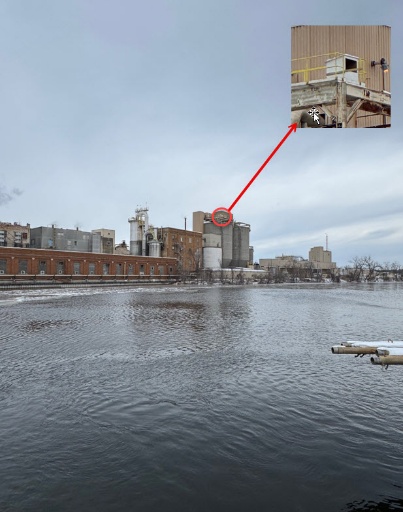
In addition to Domtar Nekoosa employees, Fuller Mechanical and Van Ert Electric Company also contributed to the installation of the nesting box.
Peregrine falcons have made a remarkable recovery after nearly disappearing from much of North America. According to the U.S. Fish and Wildlife Service, only 324 known nesting pairs of peregrine falcons were left in North America by 1975.
Their recovery was spurred by the ban on the pesticide DDT by the U.S. Environmental Protection Agency in 1972. DDT interfered with calcium in the birds’ eggshells during formation. The resulting eggshells were thin and vulnerable to breaking during incubation, according to raptor-focused nonprofit The Peregrine Fund.
Falcon populations gradually recovered under conservation programs and federal protection. The peregrine falcon was removed from the federal endangered species list in August 1999, although it remains endangered under Wisconsin law.
The peregrine falcon’s appearance at the mill represents a promising early sign for the new nesting site. If a pair nests in the box, the Wisconsin Department of Natural Resources will band any chicks in order to track their movements, Reinke said.
The nesting box reflects Nekoosa Mill employees’ broader interest in protecting wildlife along the Wisconsin River, and Reinke is looking ahead to next spring’s nesting season to see whether a pair makes the box its home.
“I didn’t think we’d see a falcon up there this fast,” Reinke said. “I’m excited to see if we get a nesting pair. I’ll be following what happens with their eggs and then generations of birds after that.”